
Clinical Trial Phases I to IV: Purpose, Sample Size & Endpoints
Understand the four distinct phases of human drug trials and their statistical reporting requirements.
📌 Direct Answer / Executive Definition
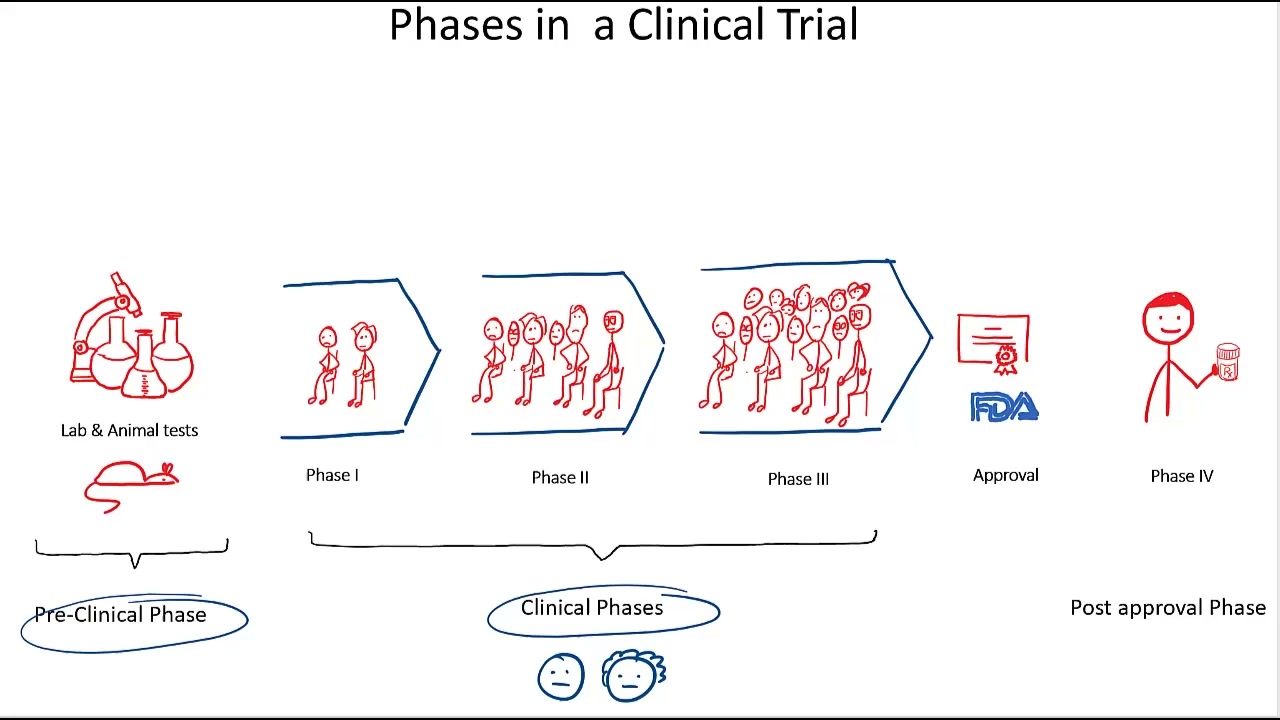
Clinical trials are biomedical research studies conducted on human volunteers in four progressive phases: Phase I (Safety & Dosage, 20-80 volunteers), Phase II (Efficacy & Side Effects, 100-300 patients), Phase III (Therapeutic Confirmation & Pivotal Efficacy, 1,000-3,000+ patients), and Phase IV (Post-Marketing Surveillance & Long-term Safety).
Why Clinical Trial Phases Matter for Regulatory Biostatistical Programming
Clinical SAS programmers write the validation, transformation, and summary scripts for regulatory submission (NDA / BLA) to regulatory agencies like the FDA and EMA.
Standard Syntax, Derivation & Framework Pattern
/* Flagging Treatment Phases & Cohort Assignment */
DATA work.trial_cohorts;
    SET raw.dm;
    LENGTH Phase_Label $25;
    SELECT (STUDYPH);
        WHEN ('PH1') Phase_Label = 'Phase I: Safety/PK';
        WHEN ('PH2') Phase_Label = 'Phase II: Proof of Concept';
        WHEN ('PH3') Phase_Label = 'Phase III: Pivotal Trial';
        OTHERWISE    Phase_Label = 'Post-Market Observational';
    END;
RUN;
Core Rules & Certification Takeaways
- Phase I focuses primarily on pharmacokinetics (PK), maximum tolerated dose (MTD), and toxicity profile.
- Phase II evaluates therapeutic biological activity and optimal dosing regimens in targeted patient populations.
- Phase III provides pivotal, multi-center, double-blind randomized evidence required for FDA approval.
- Phase IV monitors real-world adverse drug reactions (ADRs) and long-term pharmacovigilance.
🔗 Related Architectural Concepts & Next Steps
Deepen your mastery with connected topics across our curriculum and knowledge hubs.
Frequently Asked Questions (FAQ)
What is the primary role of a Clinical SAS Programmer in Phase III trials?
Transforming raw Electronic Data Capture (EDC) files into CDISC SDTM and ADaM datasets, and producing validated Tables, Listings, and Figures (TLFs) according to the Statistical Analysis Plan (SAP).
What is an NDA in pharmaceutical clinical trials?
A New Drug Application (NDA) is the comprehensive dossier submitted to the FDA containing all non-clinical and clinical trial data demonstrating safety and efficacy for market approval.
Want complete video breakdowns & exercises?
Explore full step-by-step masterclass training in Clinical SAS Programming & Clinical Trials.