
Critical Path Method (CPM): Calculating Forward/Backward Pass & Float
Determine the shortest possible project duration and identify zero-float critical activities.
Direct Answer / Executive Definition
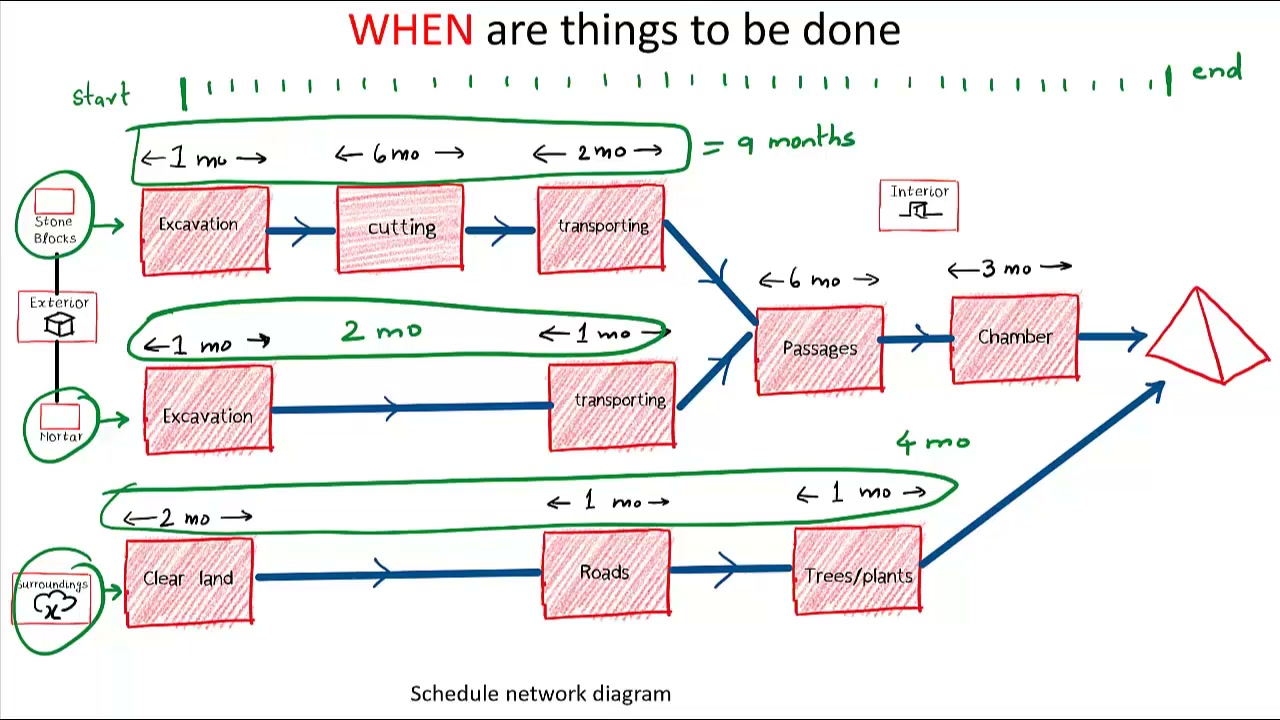
The Critical Path Method (CPM) is a schedule network analysis technique used to calculate the sequence of activities that represents the longest path through a project, which determines the shortest possible project duration. Activities on the critical path have zero Total Float (Float = Late Start - Early Start = 0). Any delay on the critical path delays the final completion date.
Why Critical Path & Float Analysis Matter for Schedule Optimization
Project managers use CPM to know exactly which tasks can be delayed without impacting the deadline (free/total float) and where to apply schedule compression techniques (Crashing or Fast-Tracking).
Standard Syntax, Derivation & Framework Pattern
/* Two-Pass CPM Calculation Logic */
1. Forward Pass (Early Start & Early Finish):
   - ES(First Activity) = 0 (or 1)
   - EF = ES + Duration
   - ES(Successor) = Max(EF of all Predecessors)

2. Backward Pass (Late Start & Late Finish):
   - LF(Last Activity) = EF(Last Activity)
   - LS = LF - Duration
   - LF(Predecessor) = Min(LS of all Successors)

3. Float (Slack) Calculation:
   - Total Float = LS - ES  (or LF - EF)
   - Free Float  = ES(Successor) - EF(Current Activity)
Core Rules
- The Critical Path is the longest path through the network diagram with the least (typically zero) total float.
- Crashing adds resources to critical path tasks at the lowest cost to shorten schedule (increases cost and risk).
- Fast-Tracking executes critical path activities in parallel that were originally planned in sequence (increases risk and rework).
- Total Float is the amount of time an activity can be delayed without delaying the project end date.
Related Architectural Concepts & Next Steps
Deepen your mastery with connected topics across our curriculum and knowledge hubs.
Frequently Asked Questions (FAQ)
Can a project have more than one critical path?
Yes. A project network diagram can have multiple concurrent paths of equal maximum duration, which increases overall project schedule risk.
What is the difference between Total Float and Free Float?
Total Float is the delay an activity can suffer without delaying the project finish date. Free Float is the delay an activity can suffer without delaying the early start of any immediate successor.
Want complete video breakdowns & exercises?
Explore full step-by-step masterclass training in Project Management Fundamentals.