
ADSL Subject-Level Analysis Dataset: Derivation Rules & Keys
Master the structure of ADSL, the single most critical dataset in any clinical trial submission.
Direct Answer / Executive Definition
ADSL (Subject-Level Analysis Dataset) is the mandatory master dataset in CDISC ADaM containing exactly one record per subject. It contains demographic attributes, baseline characteristics, treatment start/end dates, treatment duration, and population analysis flags (SAFFL, ITTFL, PPROTFL) used across all subsequent analysis domains.
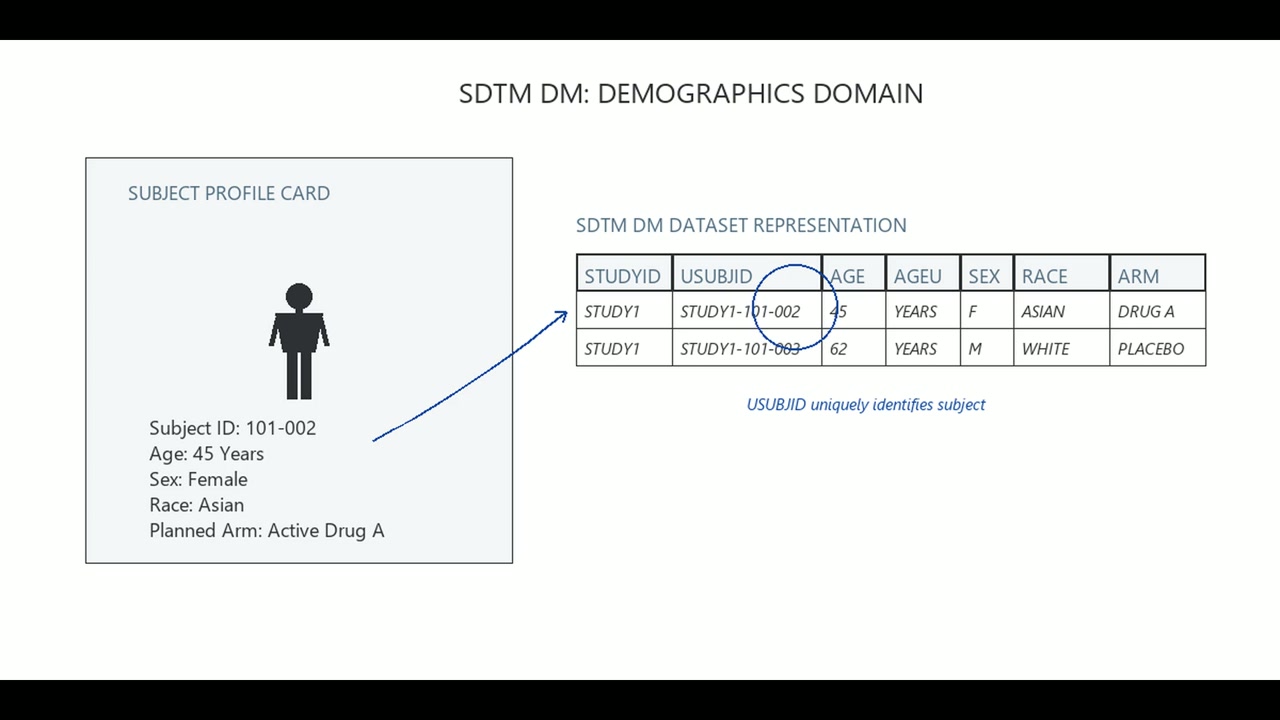
Why ADSL Subject-Level Architecture Matters in Clinical Submissions #
Every BDS analysis dataset (ADAE, ADLB, ADVS, ADTTE) merges with ADSL to inherit treatment arms, baseline covariates, and safety flags.
Standard Syntax, Derivation & Framework Pattern #
/* Building Key Baseline Flags in ADSL */
DATA adam.adsl;
    SET sdtm.dm;

    /* Standard Character & Numeric Treatment Variables */
    IF ARM = 'Drug X 50mg' THEN TRT01PN = 1;
    ELSE IF ARM = 'Drug X 100mg' THEN TRT01PN = 2;
    ELSE IF ARM = 'Placebo' THEN TRT01PN = 3;
    TRT01P = ARM;

    /* Age Group Categorization */
    LENGTH AGEGR1 $20;
    IF AGE < 65 THEN AGEGR1 = '<65 years';
    ELSE IF AGE >= 65 THEN AGEGR1 = '>=65 years';

    /* Intent-to-Treat & Safety Population Flags */
    IF ARM NE 'Screen Failure' THEN ITTFL = 'Y';
    ELSE ITTFL = 'N';
RUN;
Core Rules #
- ADSL has exactly one observation per subject (USUBJID is the primary unique sorting key).
- Contains paired character and numeric variables for treatment (TRT01P / TRT01PN) and stratification factors.
- Stores master dates: TRTSDT (Treatment Start Date), TRTEDT (Treatment End Date), and TRTDURD (Treatment Duration in Days).
- Acts as the denominator donor for calculating incidence percentages in AE and Safety tables.
The Beginner's Guide to CDISC Data Lineage: From Raw EDC to FDA Submissions
How raw EDC data flows through SDTM domains into ADSL, BDS, and regulatory CSR tables.
Frequently Asked Questions (FAQ) #
Why does the ADSL dataset have only one record per subject?
ADSL represents subject-level metadata. Having exactly one row per subject (unique USUBJID) guarantees consistent population denominators and baseline characteristics across all clinical trial reporting.
What is the difference between TRT01P and TRT01A in ADSL?
TRT01P represents Planned Treatment (the arm randomized to receive), while TRT01A represents Actual Treatment (the drug dose actually administered).
How does ADSL relate to SDTM DM and other ADaM datasets?
ADSL is derived primarily from the SDTM DM (Demographics), EX (Exposure), and DS (Disposition) domains, and its core variables are merged into every downstream BDS/OCCDS dataset (ADAE, ADLB, ADVS). See our full guide on CDISC SDTM vs. ADaM Data Architecture and Understanding SDTM vs ADaM in Clinical SAS.
Want complete video breakdowns & exercises?
Explore full step-by-step masterclass training in Clinical SAS Programming & Clinical Trials.